Thangka Painting
During the week of Holi and the elections, we had a week off. It was a bit uncertain what to expect in the lead-up to the elections. After the protests in September, there seemed to be some tension among politicians, the police, the army, and also the general population.
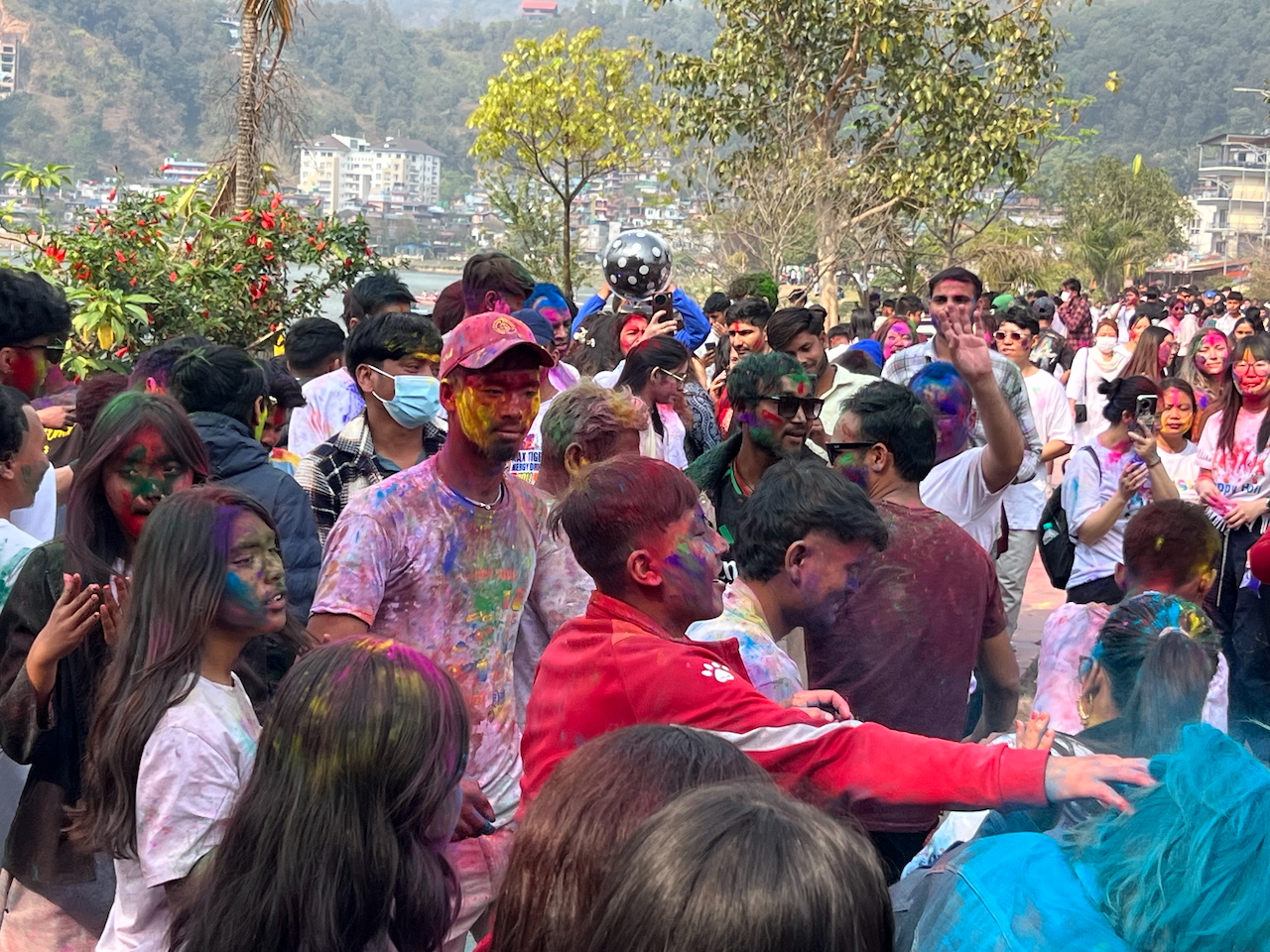
As a precaution, an evening curfew was introduced. Alcohol sales were banned (except in tourist hotels and restaurants), loud music around the lake was not allowed, and the authorities did not seem very enthusiastic about large gatherings. But how do you regulate that on a day like Holi, the Hindu spring festival that celebrates the victory of good over evil and serves as a New Year's celebration? On that day everyone, dressed in white, goes out into the streets throwing colored powder at each other, smearing it into faces and hair. There is a strong feeling of togetherness and everyone just wants to celebrate.
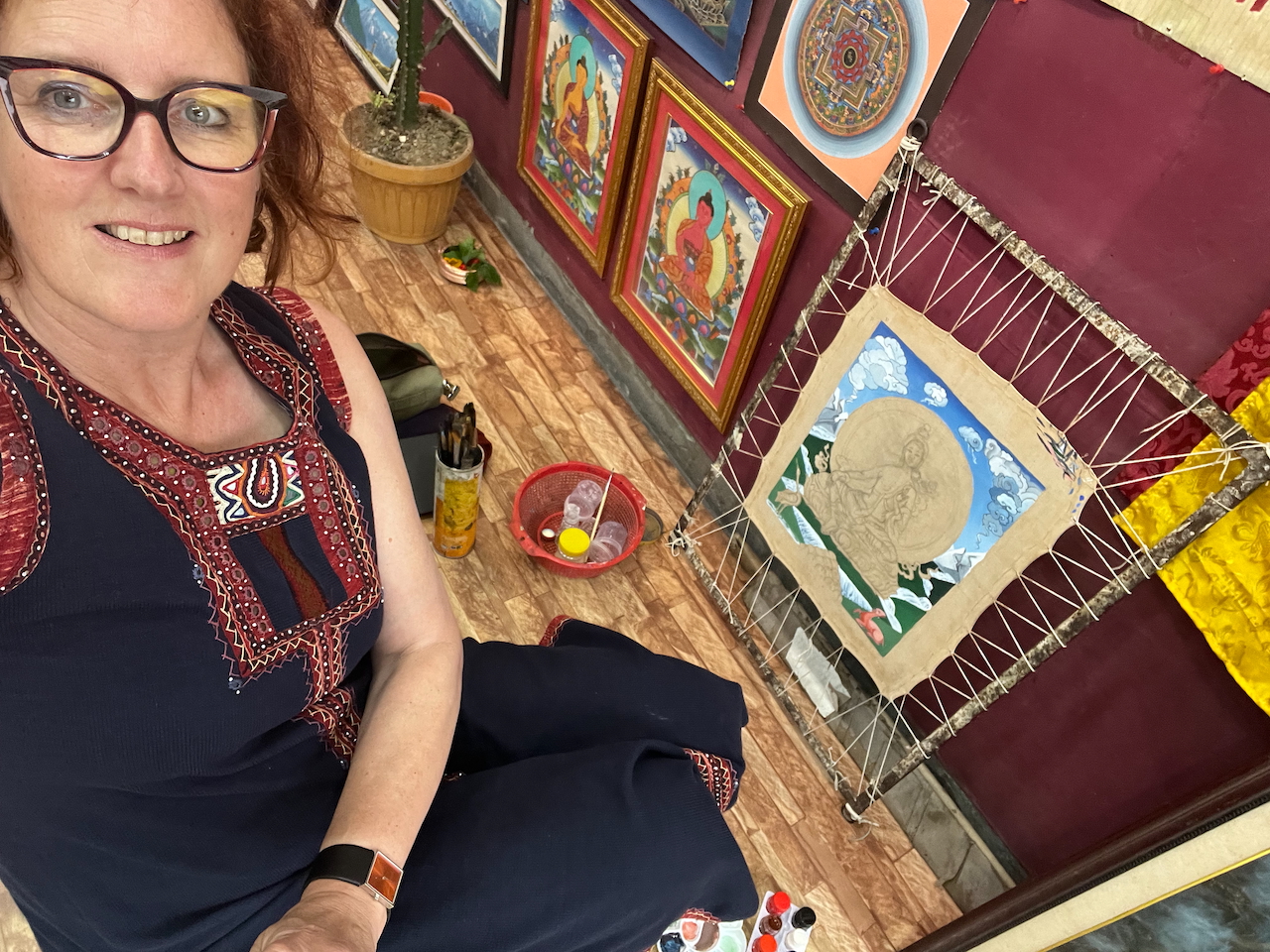
One of my goals during my stay was to take a Thangka painting course. Suddenly I had a whole week free, so I decided this was the perfect moment. A thangka is a traditional Tibetan Buddhist scroll painting on cotton or silk, often framed with silk or brocade. It usually depicts Buddhas, deities, or mandalas and serves as an aid for meditation, teaching, and devotion. Because thangkas can be rolled up easily, they were originally practical for traveling monks. They are created according to very strict iconographic rules.
Why a thangka? For me it is a completely new way of painting, both technically and iconographically, a real challenge. I decided I had five days to work on it, but how large or complex could it be? I had no idea. In the end my thangka measures about 35 × 43 cm, and I spent roughly 20 hours painting, including preparing the canvas.
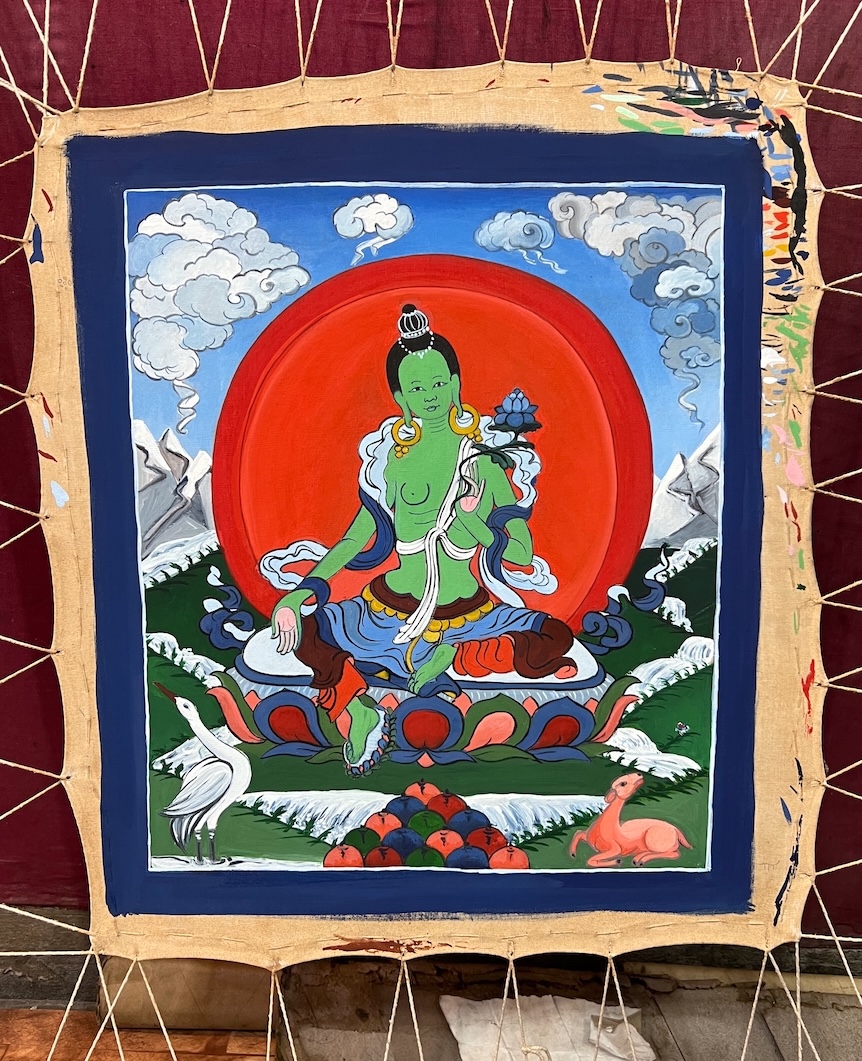
I don't use thangkas at home as meditation objects, but painting one is meditative in itself. For hours I sat bent over the canvas, completely absorbed, sometimes forgetting about food and drink.
For my subject I chose the Green Tara, whose story immediately appealed to me. She is one of the 21 Taras, each with their own color and meaning. Tara is regarded as the mother of the Tibetan people and is often depicted as a devoted queen or consort.
The Green Tara represents active compassion, protection, and enlightenment. She helps people overcome fears, obstacles, and dangers. Her green color symbolizes active energy, wind and air (swift and flexible), and renewal. Her posture is dual, which you can see in the position of her legs: partly meditative (lotus position) and partly ready to take action (one foot extended downward). The blue, half-closed lotus symbolizes powerful, awakening wisdom and purity. As a half-open flower it represents the mind opening toward enlightenment and the transformative power that turns ignorance into insight. Hopefully her energy will not only reach me, the world today could certainly use some of it right now.
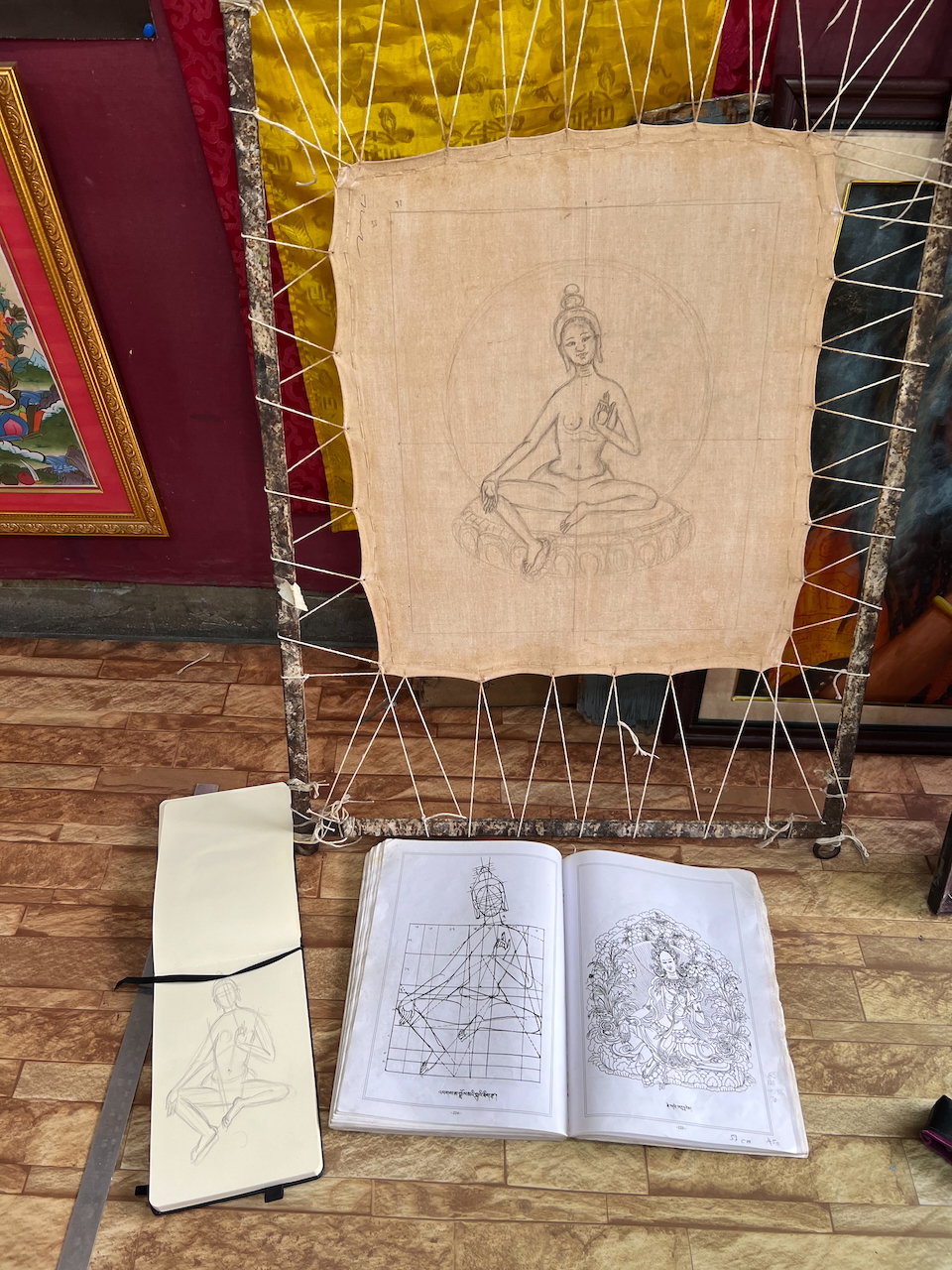
I enjoyed the entire process: stretching and preparing the canvas, researching the visual language, making the sketch, and finally painting it in. Apparently they often have students with less experience, because I was surprised when my teacher offered to help with the drawing and mixing the colors. “Why?” I asked. For me the challenge was to do it myself, although of course I was open to tips and tricks.
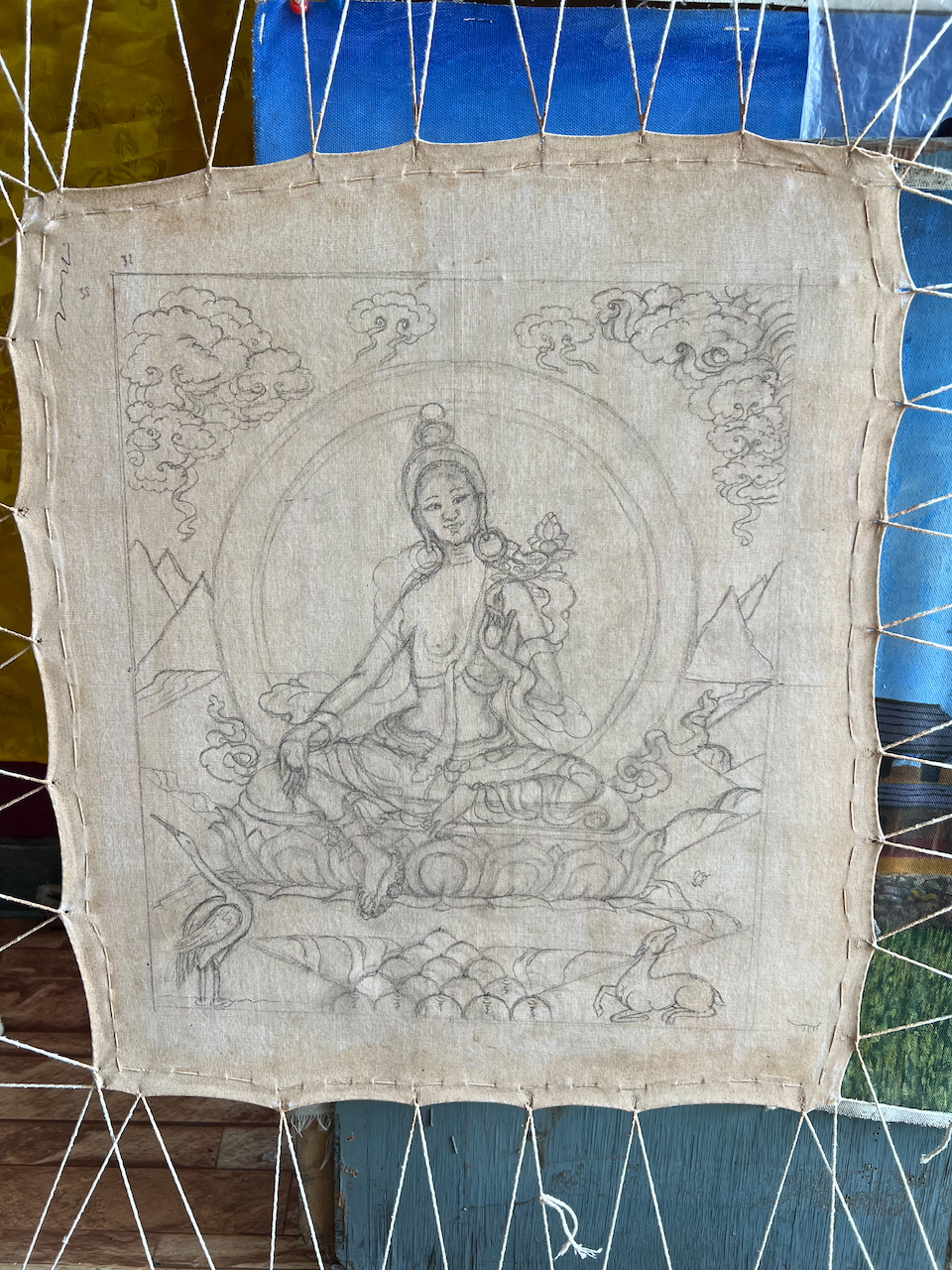
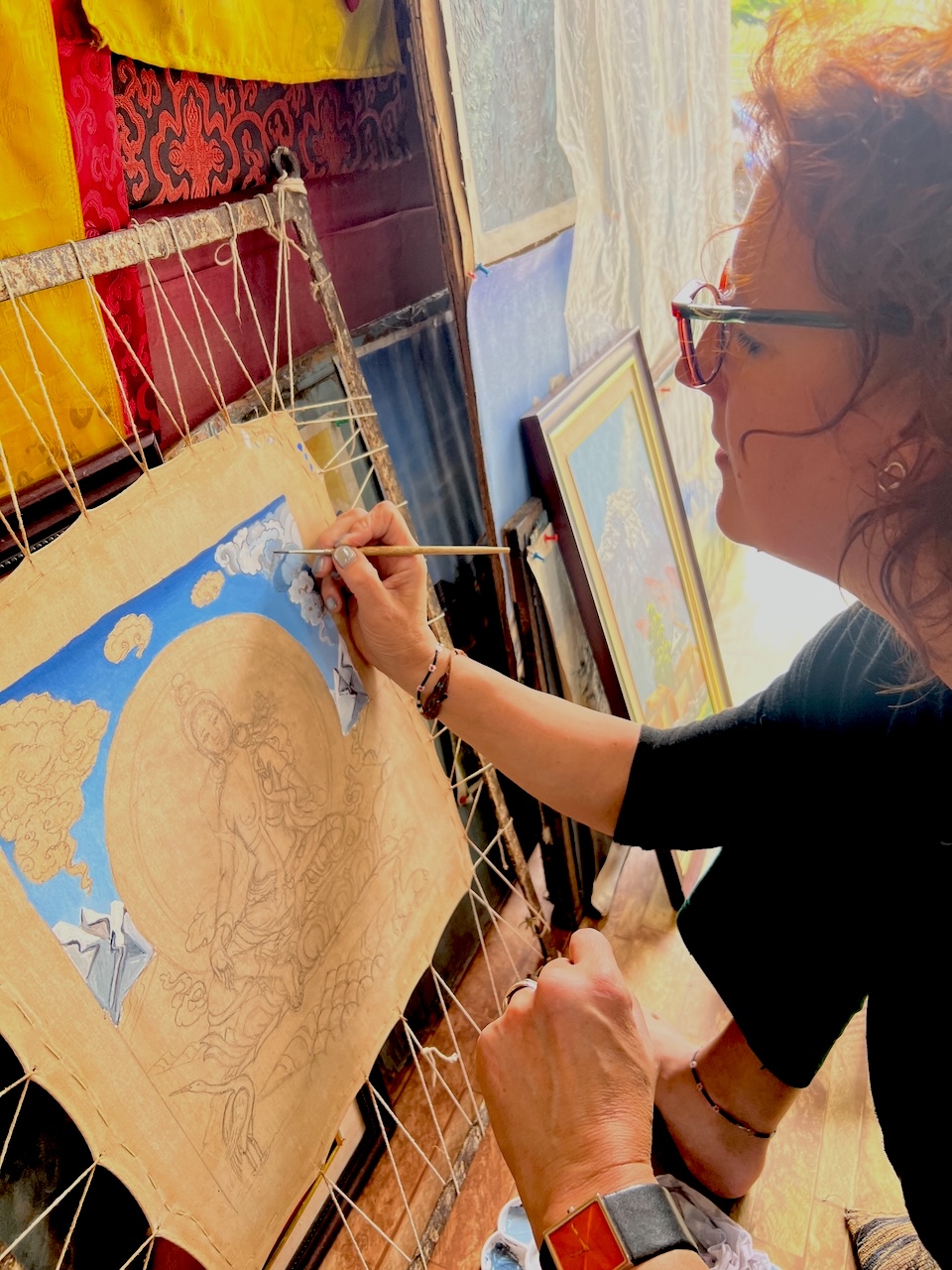
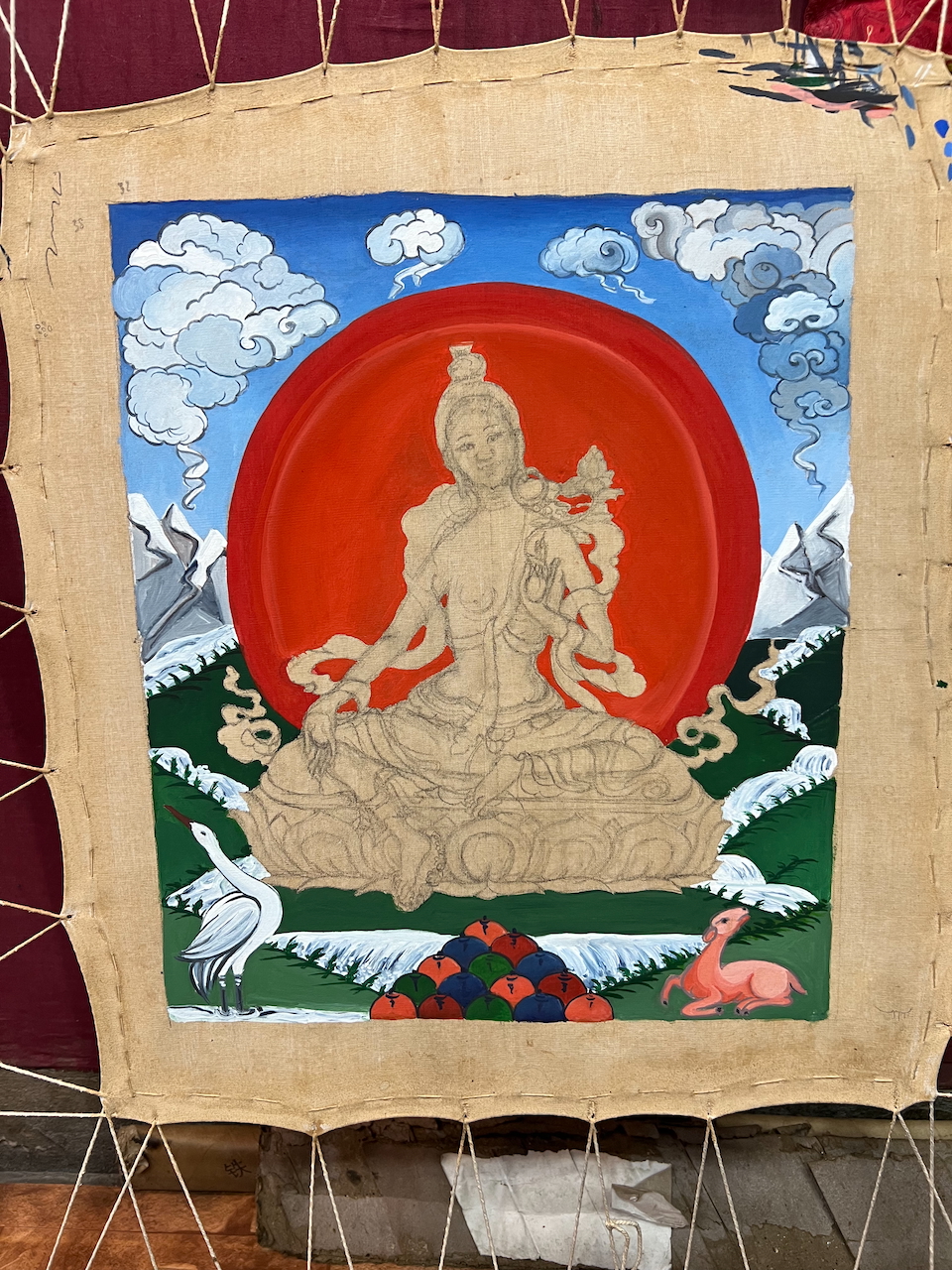
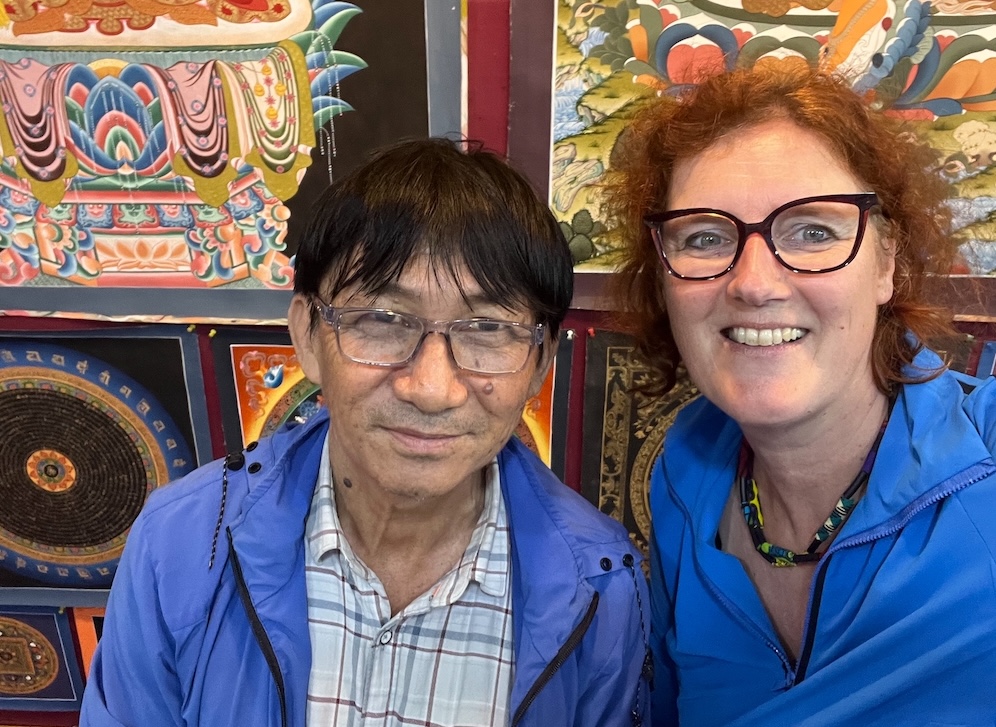
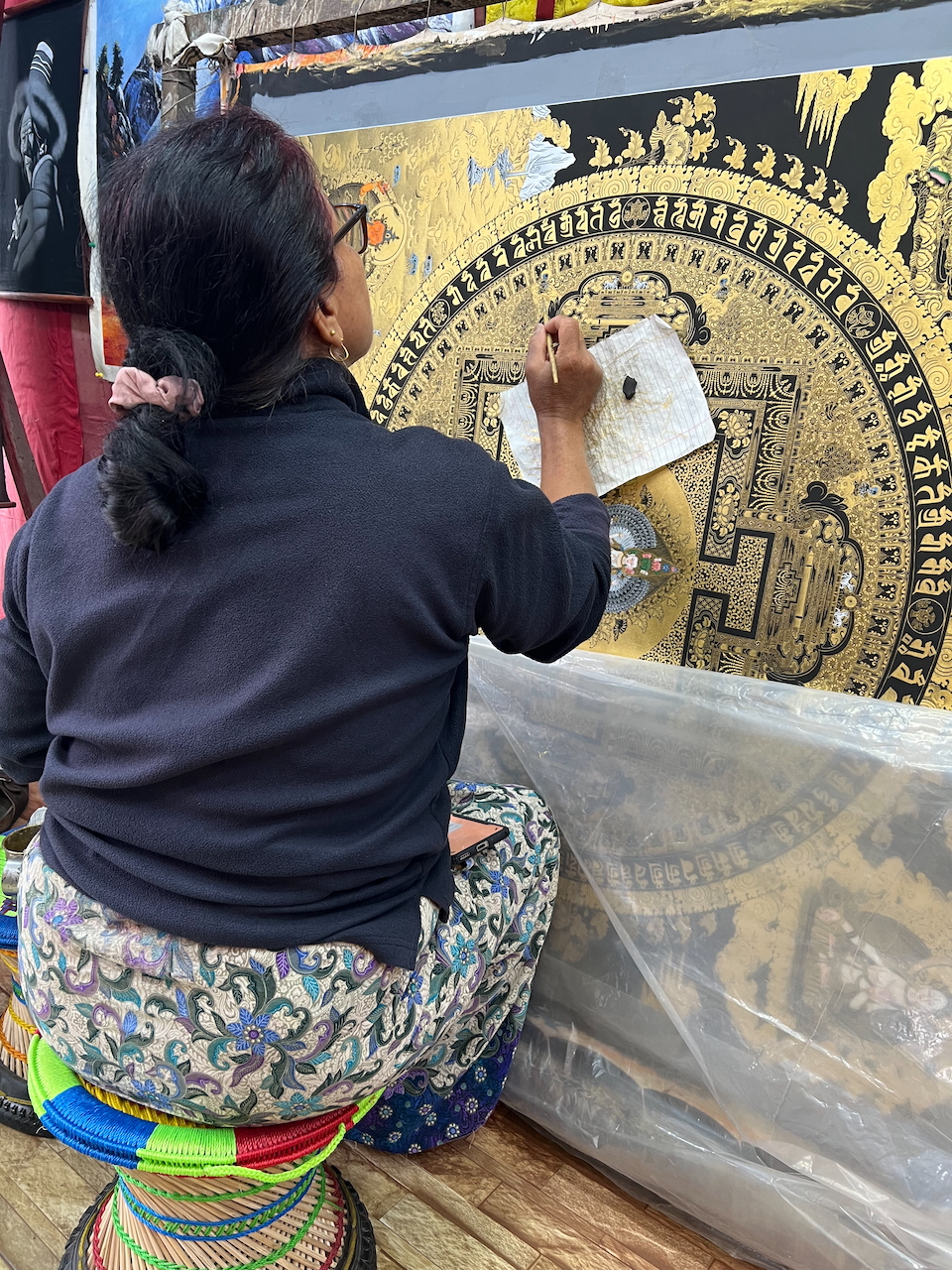
It was quite a job, but in the end I am very happy with the result. Even though the iconography of the Green Tara follows strict rules, I still managed to give it my own interpretation, something that Buddha Lama, my teacher, and his wife seemed to find rather amusing. They themselves create beautiful large thangkas, which take six to twelve months to complete.